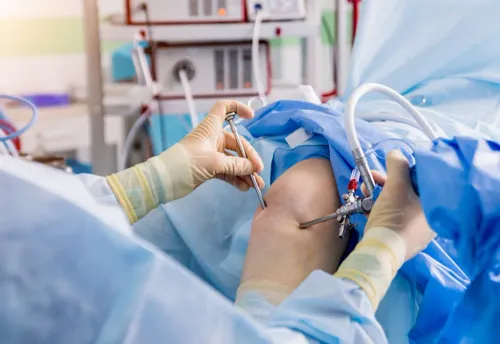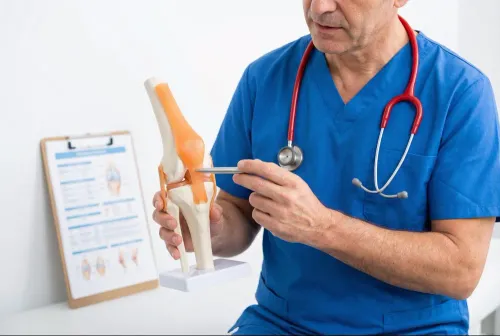
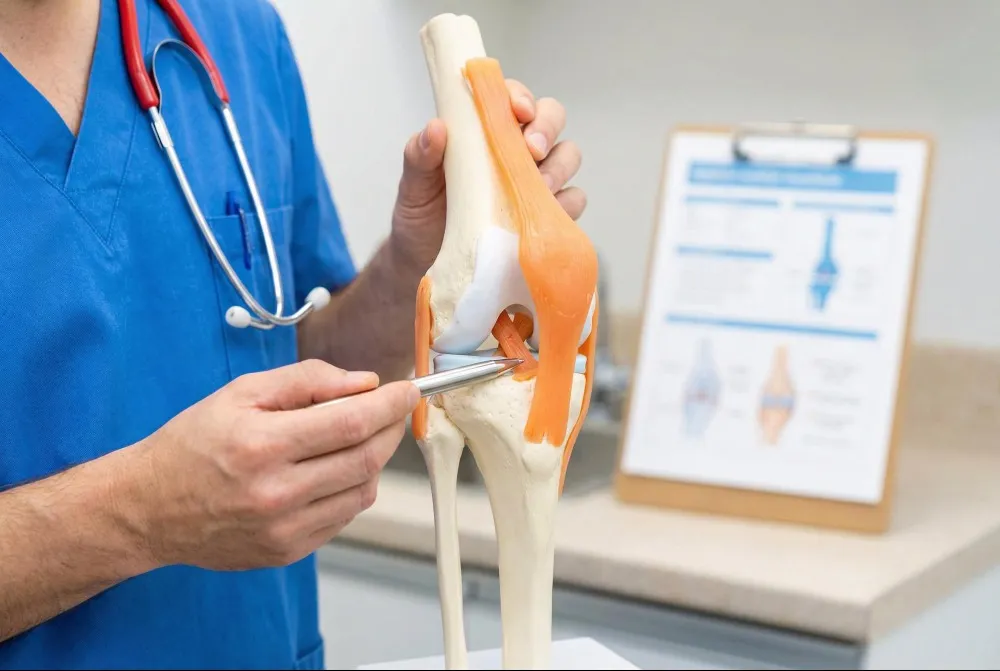
Joint pain does not always mean that replacement surgery is inevitable. In selected patients, particularly those with early or localised joint damage, treatment may focus on preserving as much of the natural joint as possible.
This is the principle behind Joint Preservation Surgery.
For younger and active patients in Rohini Sector 15, Delhi, understanding joint-preserving options can be particularly valuable because treatment decisions may affect decades of future mobility.
What Does Joint Preservation Mean?
Joint preservation refers to strategies intended to maintain the patient's native joint while treating the underlying problem contributing to pain or deterioration.
It is not one single operation.
Depending on the joint and diagnosis, treatment may involve addressing alignment, cartilage, bone, instability or other structural abnormalities.
The goal is to improve function and, where possible, slow further deterioration.
Who May Be Considered?
Joint-preserving treatment is most relevant when damage has not progressed to the point where the entire joint is severely compromised.
Potential considerations include:
- Patient age
- Location of joint damage
- Condition of remaining cartilage
- Limb alignment
- Stability of the joint
- Activity expectations
- Bone quality
- Cause of deterioration
Two patients of the same age can therefore receive different recommendations.
Preservation Versus Replacement
Joint replacement and joint preservation solve different clinical problems.
Replacement removes damaged joint surfaces and substitutes prosthetic components. Preservation attempts to retain the natural joint and address specific structural abnormalities.
Replacement may be appropriate when arthritis is advanced and widespread.
Preservation may have a role when disease is earlier, more localised or associated with a correctable mechanical problem.
The decision should not be based on age alone.
Why Early Assessment Can Matter
Some joint conditions become harder to treat with preservation techniques after substantial deterioration has occurred.
That does not mean every early joint problem needs surgery. In fact, many can be managed conservatively.
It does mean that persistent symptoms should be accurately diagnosed.
Ignoring repeated swelling, instability, restricted movement or progressively worsening pain can allow the underlying condition to advance without appropriate assessment.
Questions Patients Should Discuss
Before considering Joint Preservation Surgery, useful questions include:
- What part of the joint is damaged?
- How much healthy cartilage remains?
- Is alignment contributing to the problem?
- Can physiotherapy or another non-operative approach help?
- What is the objective of the proposed procedure?
- Could replacement eventually still be necessary?
- What rehabilitation would follow?
These questions create realistic expectations.
At UR Orthopaedic Clinic, patients with persistent joint symptoms can undergo evaluation to determine the extent and pattern of joint damage. For patients around Rohini Sector 15, the assessment can help establish whether conservative care, a preservation strategy or another orthopaedic treatment is appropriate.
Joint preservation is not a universal alternative to replacement. Once arthritis becomes extensive, preservation procedures may no longer offer the same potential value.
For suitable patients, however, identifying and treating the mechanical or structural cause of joint deterioration can provide another pathway before replacement becomes necessary.
The key is appropriate timing and patient selection based on clinical examination and imaging rather than choosing a procedure simply because it sounds less extensive.
Keywords