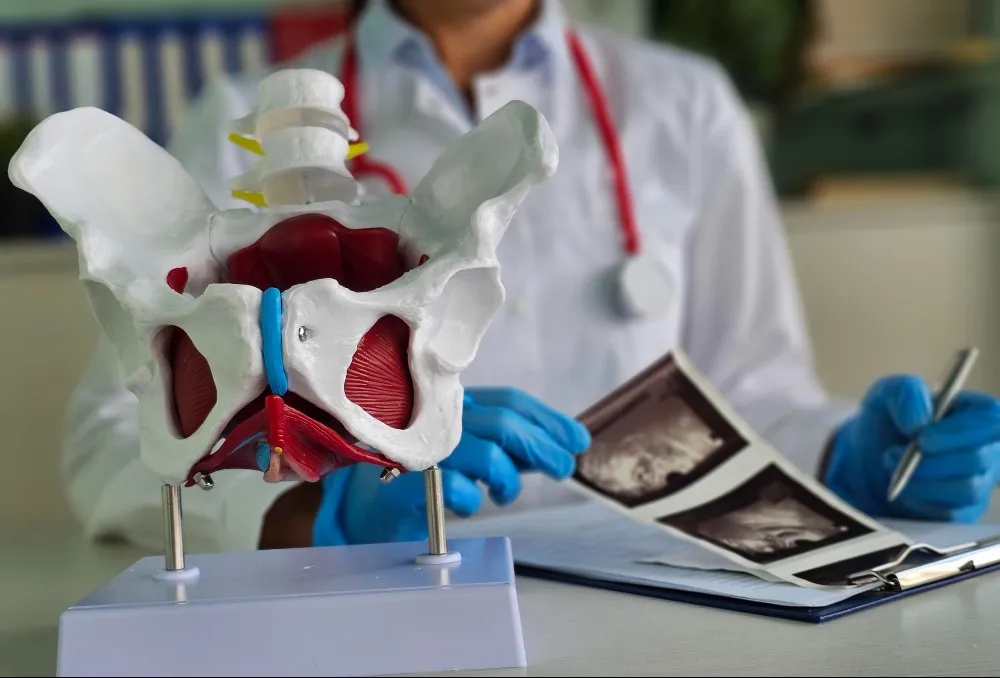
A pelvic fracture can range from a relatively stable injury to a major trauma involving multiple parts of the pelvic ring. The more severe patterns demand careful assessment because the pelvis supports body weight and surrounds important blood vessels, nerves and internal organs.
A Complex Pelvic Fracture therefore requires a different level of planning from many straightforward limb fractures.
For patients and families in Rohini Sector 17, Delhi, understanding the seriousness of these injuries can help them recognise why specialised evaluation and coordinated care may be necessary.
Why Pelvic Fractures Are Different
The pelvis is a ring-like structure formed by several bones connected through joints and ligaments.
Because it functions as a ring, an injury at one point may sometimes be accompanied by damage elsewhere.
Pelvic fractures can result from road traffic accidents, falls from height and other high-energy trauma. In older adults with fragile bones, lower-energy falls can also cause certain pelvic fractures.
Stable and Unstable Injuries
Not all pelvic fractures need surgery.
Stable fractures may sometimes be managed without operative fixation, depending on the patient's symptoms and fracture configuration.
An unstable injury is different. Disruption of the pelvic ring can affect mechanical stability and may be associated with other injuries.
Assessment can involve:
- Physical examination
- X-rays
- CT imaging
- Evaluation of haemodynamic stability
- Examination for associated injuries
- Neurological and vascular assessment where relevant
In major trauma, immediate life-threatening issues take priority.
When Might Surgery Be Required?
Surgical fixation may be considered when the fracture pattern is unstable, significantly displaced or unlikely to maintain satisfactory alignment without intervention.
The exact treatment depends on which part of the pelvis is damaged.
A Complex Pelvic Fracture cannot therefore be managed according to a single standard operation.
Surgeons consider the injury pattern, patient's overall stability, soft-tissue condition and associated trauma before planning definitive treatment.
Recovery Requires Patience
Pelvic fracture recovery may involve restrictions on weight bearing, pain management, physiotherapy and repeated imaging to assess healing.
Patients should understand exactly how much weight can safely be placed through the injured side. Trying to progress too quickly can be harmful, while unnecessary prolonged immobility has its own disadvantages.
Rehabilitation therefore needs to be individualised.
Important Questions for the Orthopaedic Team
Families can ask:
- Is the fracture stable or unstable?
- Which parts of the pelvic ring are affected?
- Are there associated injuries?
- Is surgery required?
- When can the patient begin sitting, standing or walking?
- What follow-up imaging will be needed?
UR Orthopaedic Clinic can provide orthopaedic evaluation and second-opinion assessment for musculoskeletal injuries where appropriate. Patients around Rohini Sector 17 who already have imaging can discuss the fracture findings and recommended treatment pathway with an orthopaedic professional.
Major pelvic trauma may require treatment in a hospital equipped for emergency and multidisciplinary care, particularly when internal injuries or significant bleeding are suspected.
The priority with a complex pelvic injury is not simply to 'fix a fracture.' Treatment must consider the stability of the pelvic ring, associated injuries, mobility requirements and the safest route toward recovery.
Keywords