
Persistent knee pain can gradually affect almost every part of daily life. Walking becomes slower, stairs feel difficult, sleep may be disturbed, and activities that once felt routine can require considerable effort. For people experiencing advanced knee arthritis, understanding when to consult the Best Knee Replacement Surgeon is an important part of making an informed treatment decision.
For patients in Rohini Sector 24, Delhi, knee replacement is generally considered only after the cause and severity of knee damage have been properly evaluated.
Why Knee Pain Can Become Persistent
The knee is a weight-bearing joint containing cartilage, bone, ligaments and other supporting structures. Healthy cartilage allows the joint surfaces to move smoothly. When cartilage becomes significantly worn or damaged, movement may become painful and restricted.
Osteoarthritis is a common reason for progressive knee deterioration, although previous injuries, inflammatory conditions and certain joint deformities may also contribute.
Symptoms that deserve assessment include:
- Pain during walking or standing
- Difficulty climbing stairs
- Knee stiffness after rest
- Reduced walking distance
- Swelling around the joint
- Bowing or other visible deformity
- Pain that interferes with sleep
- Increasing dependence on pain medication
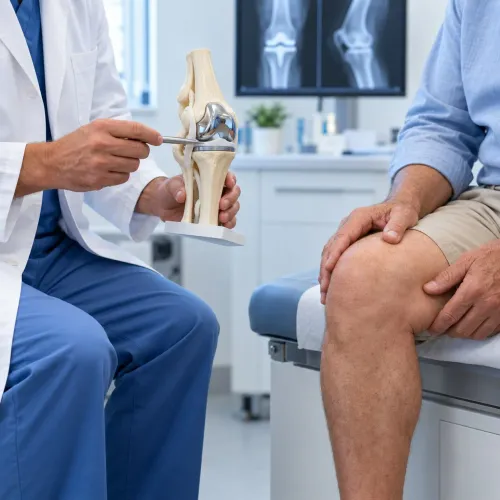
Symptoms alone do not determine whether replacement surgery is necessary. Clinical examination and appropriate imaging are important for understanding the actual condition of the joint.
Treatment Usually Begins Conservatively
Many patients with knee arthritis can initially be managed without surgery. Depending on the diagnosis, an orthopaedic treatment plan may include activity modification, physiotherapy, weight management, medication or other appropriate measures.
The aim is to control symptoms while preserving mobility for as long as reasonably possible.
Knee replacement becomes a consideration when joint damage is advanced, symptoms substantially affect quality of life and suitable non-surgical treatment no longer provides adequate relief.
What Happens During Knee Replacement?
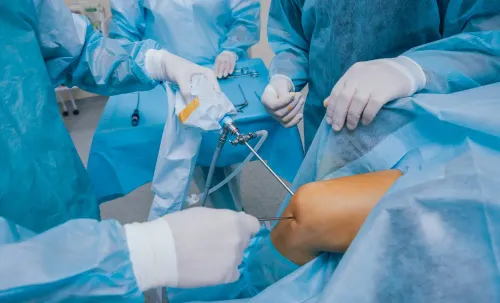
Knee replacement does not simply involve replacing the entire knee with an artificial joint. During surgery, damaged joint surfaces are prepared and replaced with specifically designed components intended to restore smoother movement and alignment.
The surgical plan can differ according to the patient's joint damage, anatomy and overall clinical condition.
Assessment therefore matters as much as the operation itself.
Questions Worth Asking Before Surgery
Patients considering surgery can ask their orthopaedic surgeon:
- How advanced is the knee damage?
- Are non-surgical options still appropriate?
- Is partial or total knee replacement being considered?
- What recovery milestones should I expect?
- How will physiotherapy be planned?
- What medical evaluation is needed before surgery?
Clear answers help patients understand both the potential benefits and limitations of treatment.
At UR Orthopaedic Clinic, patients with persistent knee problems can undergo orthopaedic assessment to determine the source and severity of symptoms. For people living around Rohini Sector 24, having an evaluation locally can also make follow-up and rehabilitation planning more convenient.
Knee replacement should be based on clinical need rather than pain alone. The combination of symptoms, X-ray findings, mobility limitations, overall health and response to previous treatment helps determine whether surgery is appropriate.
For anyone searching for the Best Knee Replacement Surgeon, the more useful question is whether the surgeon provides careful evaluation, explains alternatives and develops an individualised surgical and rehabilitation plan.
Keywords