Sudden back pain in an older adult is sometimes assumed to be a muscle strain, but vertebral compression fractures are another important possibility. These fractures can occur when weakened vertebrae partially collapse, particularly in people with osteoporosis or reduced bone strength.
For selected patients with painful vertebral compression fractures, Kyphoplasty may be considered after appropriate assessment.
Patients in Rohini Sector 7, Delhi, experiencing sudden severe back pain, particularly after a minor fall or seemingly ordinary movement, should seek medical evaluation rather than assuming the symptoms will resolve on their own.
What Is a Vertebral Compression Fracture?
The vertebrae form the bony column of the spine.
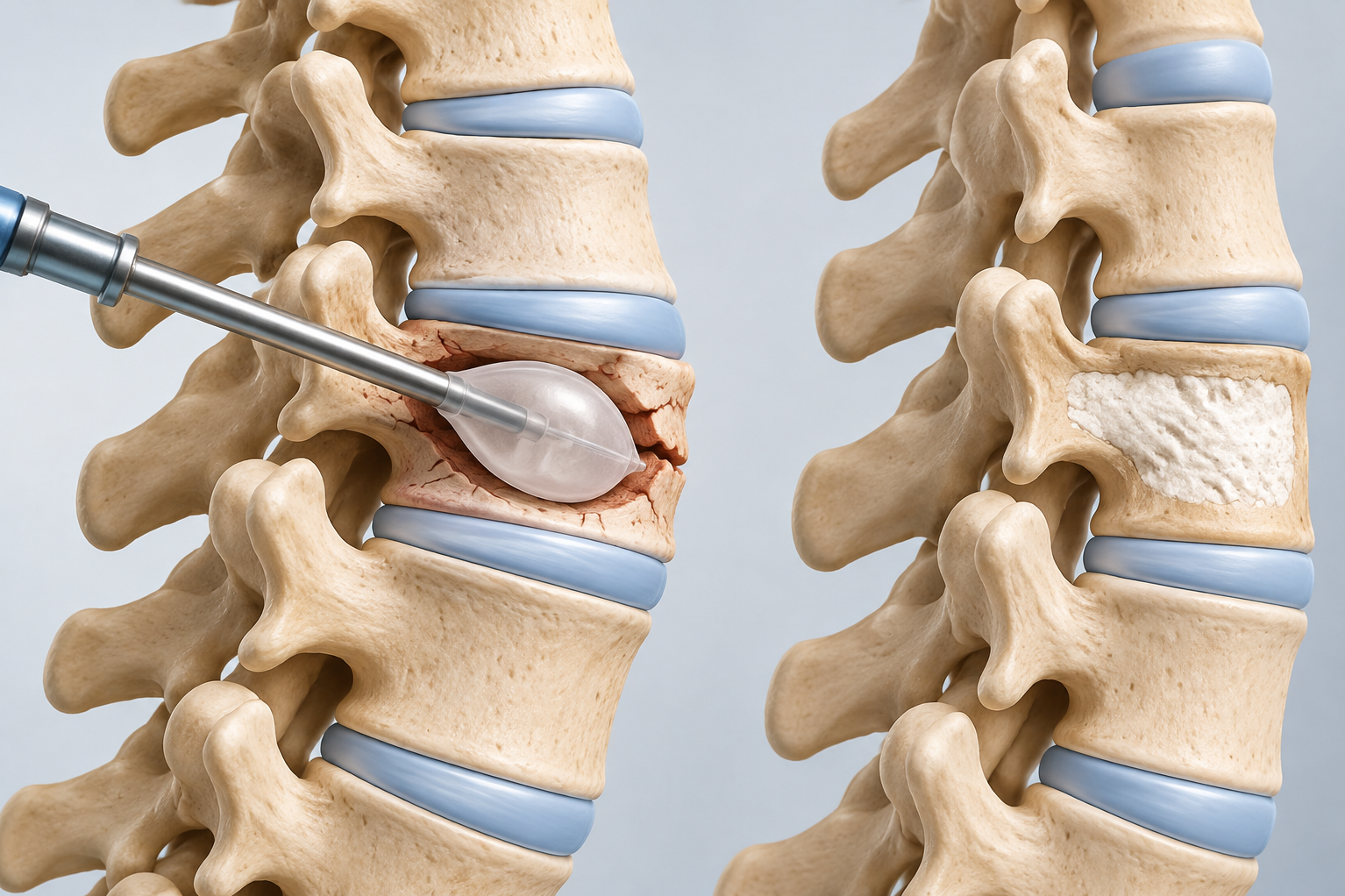
When bone becomes fragile, the front portion of a vertebral body can compress or collapse. This may produce sudden localised pain and, when multiple fractures occur over time, contribute to changes in spinal posture.
Osteoporosis is an important underlying factor, although vertebral collapse can have other causes that need to be considered.
How Is the Fracture Diagnosed?
Evaluation begins with history and physical examination.
Imaging may include X-rays and, when required, MRI or other investigations. MRI can sometimes help determine whether a fracture is recent and identify other possible causes of pain.
This distinction is important because not every old compression deformity seen on an X-ray is responsible for current symptoms.
Is Kyphoplasty Needed for Every Compression Fracture?
No.
Many vertebral compression fractures can initially be managed without an invasive procedure, depending on fracture characteristics and the patient's condition.
Treatment can include appropriate pain management, activity guidance, osteoporosis evaluation and other measures recommended by the treating physician.
Kyphoplasty may be considered in selected patients with a suitable recent compression fracture and persistent significant pain despite appropriate conservative treatment.
Patient selection is essential.
What Happens During the Procedure?
Kyphoplasty is a minimally invasive procedure in which specialised instruments are introduced into the affected vertebral body. A cavity is created, commonly using a balloon device, followed by placement of bone cement to stabilise the fractured vertebra.
The suitability of the procedure depends on factors such as fracture age, imaging appearance, symptoms and overall health.
Minimally invasive does not mean risk-free. Potential benefits and complications should be discussed individually before treatment.
Look Beyond the Fracture
Treating the painful vertebra addresses only one part of the problem when osteoporosis is present.
Patients may also need assessment of bone health to reduce the risk of additional fractures.
That may involve evaluation of:
- Bone mineral density
- Calcium and vitamin D status where indicated
- Fall risk
- Relevant medications
- Previous fragility fractures
- Other osteoporosis risk factors
This broader approach is especially important for older adults.
At UR Orthopaedic Clinic, patients with musculoskeletal and spine-related complaints can receive orthopaedic assessment and guidance regarding appropriate further management. For people living around Rohini Sector 7, existing X-rays or MRI studies can also provide useful information during evaluation.
Kyphoplasty is not simply a treatment for any back pain or every compressed vertebra. Its role depends on identifying an appropriate fracture, confirming that it corresponds with the patient's symptoms and determining whether conservative care has been sufficient.
For patients considering the procedure, careful diagnosis and appropriate selection are more important than choosing treatment based solely on the fact that it is minimally invasive.
Keywords