Recovery depends on protecting the tendon-to-bone repair while gradually restoring shoulder movement, strength, and independence. You will know what the operation involves, how to prepare your home, which activities need help, and when your surgeon must clear the next stage.
Key takeaways
- Arrange a shoulder immobiliser, help with meals, and transport before surgery.
- Keep the repaired arm in its sling and follow exercise restrictions during six weeks.
- Resume driving, work, lifting, and exercise only when movement and strength permit.
- Contact your surgical team for worsening pain, fever, drainage, or new weakness.
What happens during repair, and is repair the right operation?
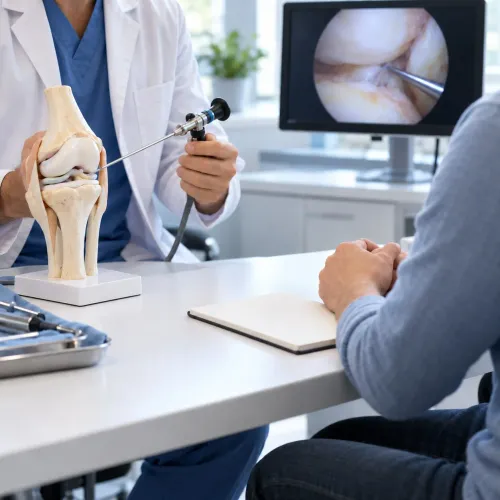
Surgeons usually perform an arthroscopic rotator cuff repair through small incisions using a camera and instruments. They freshen the torn tendon and its attachment site, then secure the tendon to the upper-arm bone with tendon-to-bone anchors.
An open rotator cuff repair uses a larger incision and may be chosen for a large, complex, or difficult-to-access tear.
The operation can include additional work:
- Debridement removes frayed tendon, inflamed tissue, or damaged cartilage that causes pain but does not need repair.
- Acromioplasty reshapes the underside of the acromion when it contributes to tendon impingement.
- Biceps treatment, labral repair, or subscapularis repair adds different restrictions and changes the rehabilitation plan.
Repair is most suitable when the tendon can reach the bone, the muscle retains useful quality, and the tear causes meaningful weakness or pain despite appropriate nonoperative treatment. MRI findings such as tear size, tendon retraction, fatty muscle atrophy, and chronicity influence that decision, along with age, general health, occupation, sport, and goals.
A small or partial tear may improve with activity changes, physiotherapy, and pain treatment. A surgeon may choose debridement or partial repair when full repair is not possible. Severe, irreparable tears can require tendon transfer or superior capsular reconstruction; arthritis combined with an irreparable tear may make shoulder replacement more suitable.
The choice depends on function and tissue quality, not the scan alone.
What should you arrange before rotator cuff surgery?
Arrange the medical checks before your operation date, not during the admission. X-rays show bone shape and arthritis; an MRI defines tendon retraction, muscle quality, and other damage. Your surgeon and anaesthetist will decide whether you need blood tests, an ECG, or additional assessment for heart, lung, or kidney conditions.
Medical clearance confirms that these risks are addressed.
A medication review is essential. Give the team a complete list, including aspirin, warfarin, apixaban, clopidogrel, insulin, diabetes tablets, steroids, supplements, and herbal products. Do not stop blood thinners or change diabetes medicine without written instructions about the operation and fasting.
Smoking cessation before surgery improves oxygen delivery and wound healing. Diabetes control also matters: ask which blood-glucose targets and medication adjustments apply on the day of surgery.
Make these practical arrangements before you go in:
- Book a responsible adult to drive you home; you cannot safely drive while wearing a protective sling, taking opioid or sedating medicine, or lacking reliable two-arm control.
- Arrange help with bathing, dressing, meals, shopping, and pets for the first several days.
- Place frequently used items between waist and shoulder height, and remove trip hazards.
- Set up a recliner or pillows to support the operated arm without pushing through it when standing.
| Arrangement | Risky plan | Safer plan |
|---|---|---|
| Transport | Driving yourself | Prearranged adult transport |
| Home support | Managing alone | Help with daily tasks |
| Work | Returning to manual duties | Leave or modified desk work with arm support |
How do you manage the first six weeks at home?
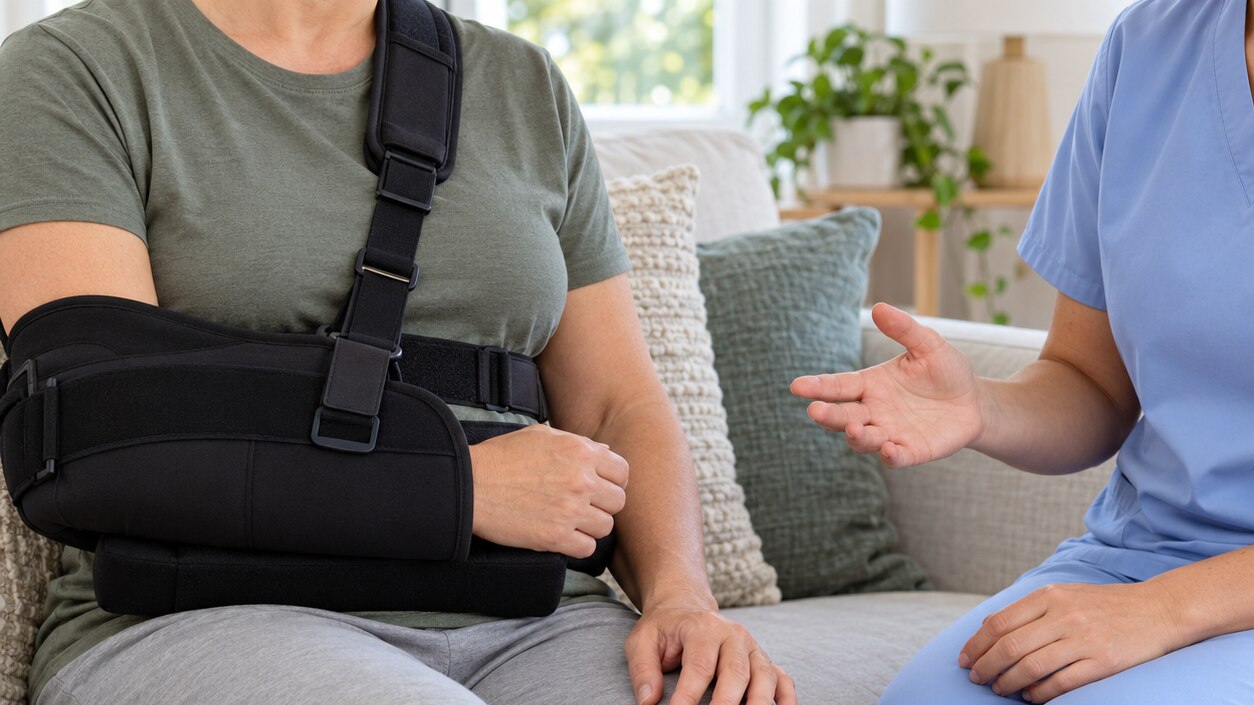
For the usual sling period of about four to six weeks, wear the sling as instructed, including during sleep, and remove it only for approved exercises, hygiene, or changing clothes. It protects the repair, but your hand, wrist, and elbow should keep moving unless your surgeon says otherwise.
Early therapy usually uses passive range of motion: your therapist or opposite hand moves the shoulder while the repaired muscles stay relaxed.
Control pain before it disrupts sleep or exercises by taking prescribed medicine as directed. Apply an ice pack 15 to 20 minutes at a time, with cloth between the pack and skin.
Sleep on your back or on the opposite side with pillows supporting the operated arm; a reclining chair can make the first nights easier.
Use these home-care rules:
- Keep wound care instructions visible. Keep dressings clean and dry, and do not soak the incision in a bath or pool until the surgical team permits it.
- Shower only when cleared, protect the incision from direct water, and pat it dry rather than rubbing.
- Wear loose, front-opening clothing. Put the operated arm into the sleeve first and avoid pulling a shirt over your head.
- Perform only the prescribed exercises. Do not raise the arm actively, use resistance bands, lift objects, or force painful motion.
- Keep the sling on in crowded spaces and around pets or children, where a sudden tug could stress the repair.
Call the surgical team for fever, increasing redness or drainage, uncontrolled pain, new numbness or weakness, marked swelling, or a fall followed by lost function.
When can you drive, work, cook, lift, and exercise again?
Sling use often lasts about 4–6 weeks, but removal does not mean the tendon is ready for normal loading. Rehabilitation commonly progresses from passive movement to active-assisted movement around six weeks, then active shoulder motion when your surgeon confirms that the repair has healed enough.
- Driving after rotator cuff repair usually waits until you no longer need the sling, have stopped opioid or sedating medication, and can control the vehicle with both arms. Get surgical clearance; pain-free movement alone does not prove safe control.
- Light cooking can resume when you can work without reaching overhead, carrying heavy pans, or using the operated arm to steady yourself. Arrange help if the task requires lifting or sudden movements.
- Desk-based return to work may occur before manual work, provided you can avoid the sling interfering with your duties and keep the arm within its prescribed range. Jobs involving overhead work, pushing, pulling, or carrying need a later return to work.
- Strengthening at 10 to 12 weeks is common, but only begin bands or weights after clearance. A comfortable shoulder can still have a biologically vulnerable tendon.
- Sport and heavy lifting usually return over months, often around five to six months or later, after restored range, strength, endurance, and control.
Pain guides effort but cannot set the timetable. Pain can settle before the repair is strong, while stiffness or weakness can persist during normal healing. Follow function-based testing and the specific protocol for your tear and procedure.
Which recovery changes need medical advice?
Pain and postoperative stiffness during the first days and weeks do not prove that the tendon has failed. Contact the surgical team when symptoms worsen instead of changing exercises yourself.
| Symptom or change | More consistent with expected recovery | Contact the surgical team |
|---|---|---|
| Pain | Gradually settles with prescribed treatment and rest | Uncontrolled pain, or a sudden sharp increase |
| Movement | Slow progress as protection limits use | New, marked loss of function after a fall, jerk, or other trauma |
| Wound and temperature | Incisions remain clean and dry | Increasing redness, drainage, fever, or concerning swelling |
| Nerves and strength | Weakness follows the protected repair and improves with rehabilitation | New numbness, new weakness, or a suddenly unusable arm |
Failed repair warning signs overlap with ordinary soreness, so the event and change in function matter. A shoulder can feel better before the tendon-to-bone attachment is strong; low pain does not make lifting, pushing, pulling, or overhead work safe.
Follow-up should match the repair, not a generic calendar. A biceps tenodesis can require restrictions on resisted elbow flexion or forearm rotation, while labral, subscapularis, or fracture repairs need different protection. At UR Orthopaedic Clinic, ask for written limits tied to your exact procedure and goal, including return to sport, work demands, and driving.
Strength and endurance can lag behind motion for 6–12 months, so persistent weakness deserves assessment rather than an automatic label of normal healing or re-tear.
Frequently asked questions
What happens during rotator cuff repair, and is repair the right operation?
During arthroscopic repair, the surgeon freshens the torn tendon and its attachment site, then secures the tendon to the upper-arm bone with tendon-to-bone anchors. The right operation depends on the tear, tendon quality, symptoms, strength, and other shoulder findings.
What should you arrange before rotator cuff surgery?
Arrange transport home, help with bathing and dressing, meals that are easy to prepare, prescribed medicines, a shoulder immobiliser, and a sleeping setup that keeps the operated arm protected.
How do you manage the first six weeks at home?
Wear the sling as instructed, protect the repair from lifting and sudden movements, keep incisions clean and dry as directed, and complete only the exercises prescribed by your surgical team.
When can you drive, work, cook, lift, and exercise again?
Return to each activity after your surgeon confirms adequate pain control, movement, strength, and repair protection. Driving while using a sling or taking sedating pain medicine is unsafe.
Which recovery changes need medical advice?
Contact your surgical team for worsening or uncontrolled pain, fever, increasing redness, drainage, wound separation, new numbness or weakness, hand swelling, chest pain, or breathing difficulty.