A stiff knee after sleep or sitting can make standing, stairs, squatting and walking feel unexpectedly difficult. By the end, you will know how osteoarthritis changes the joint, how to distinguish ordinary stiffness from warning signs, and which assessments and treatments address lost movement rather than an X-ray alone.
Key takeaways
- Cartilage loss, friction, swelling and pain-related guarding all restrict knee movement.
- Shortened steps, slower stairs and difficulty rising can signal worsening knee stiffness.
- Seek prompt assessment for sudden swelling, inability to bear weight or a locked knee.
- Exercise, support devices and tailored treatment can improve movement and daily function.
Why Knee Osteoarthritis Makes the Joint Stiff
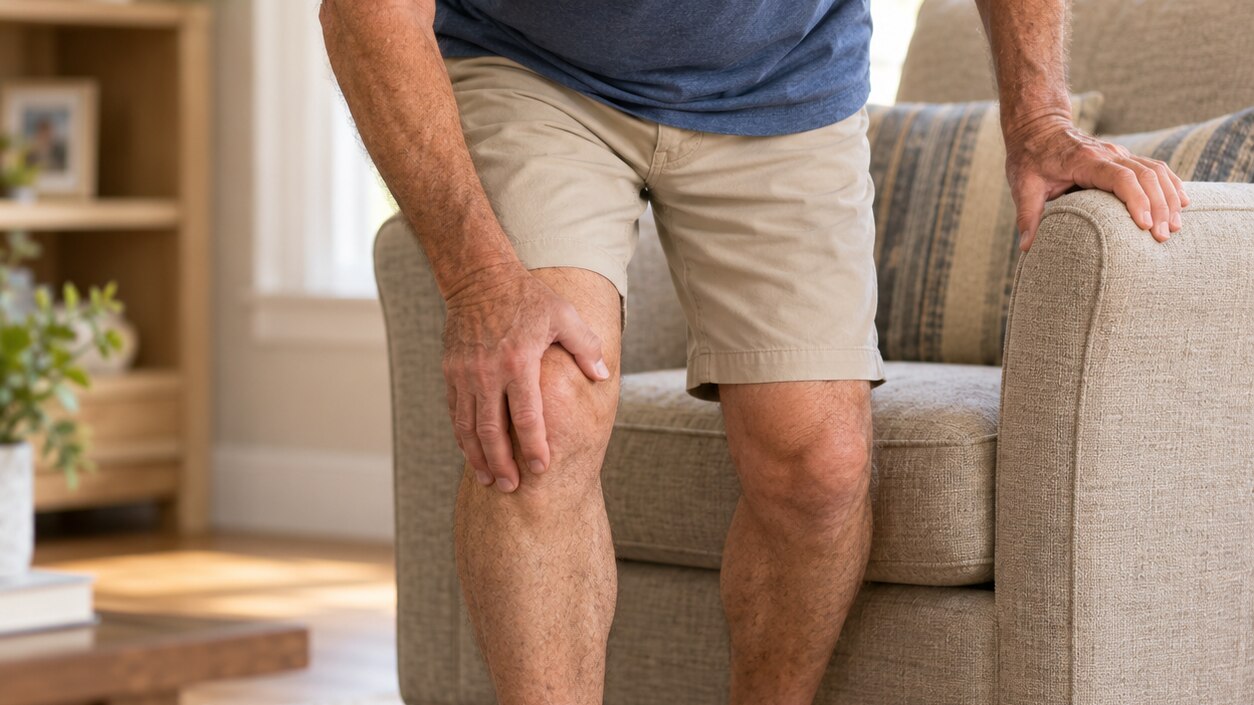
Knee osteoarthritis stiffens the joint because several tissues change at once, not because cartilage wear alone blocks movement. As the smooth cartilage thins, the thighbone and shinbone move with more friction, while the joint loses its ability to absorb load. Pain signals then make you unconsciously limit movement, which further reduces flexibility.
The main physical changes are:
- Cartilage wear: worn, rough cartilage exposes less-protected joint surfaces and increases friction during bending and walking.
- Subchondral bone change: the bone beneath the cartilage thickens and becomes painful under load.
- Synovial irritation: the joint lining becomes inflamed and produces extra fluid, causing pressure and swelling.
- Osteophytes: bony overgrowths develop around the joint margin and restrict its range.
Inactivity makes stiffness more noticeable after waking or sitting. During movement, joint fluid circulates across the surfaces and the muscles around the knee repeatedly lengthen and contract. After a period of rest, fluid distribution, mild inflammation and muscle guarding leave the knee less ready to bend, so the first steps feel tight and painful.
Movement usually eases this brief stiffness.
Stiffness lasting more than about 30 minutes after waking is less typical of osteoarthritis. It warrants assessment for inflammatory arthritis or another cause, especially when the knee is hot, markedly swollen or painful at rest.
How Stiffness Changes Everyday Movement
Stiffness is a temporary loss of knee movement: the joint feels difficult to start or bend, then loosens after several steps. Morning stiffness and stiffness after inactivity are common, especially when getting out of bed or standing after sitting. Stiffness lasting more than about 30 minutes is less typical and deserves assessment.
| Symptom | What you notice | Effect on movement |
|---|---|---|
| Stiffness | The knee feels tight or restricted, without necessarily hurting | You move slowly at first and cannot fully bend or straighten it |
| Pain | A sharp, aching or burning sensation during or after movement | You stop, shorten your stride or avoid activity |
| Swelling | Puffiness, fullness or visible enlargement around the joint | Bending becomes physically restricted |
| Weakness | The thigh cannot generate normal force | The knee struggles with rising from a chair or climbing stairs |
| Locking | The knee catches and cannot move through part of its range | You cannot fully bend or straighten it until it releases |
| Instability | The knee gives way or feels unable to support you | You hesitate, grab nearby objects or avoid uneven ground |
Daily tasks reveal functional limitation more clearly than an X-ray alone. Notice whether you need your arms to stand, take one stair at a time, or pause before walking after rest.
- Rising from a chair, especially from a low seat
- Climbing or descending stairs
- Squatting or kneeling
- Getting in and out of a car
- Putting on socks and footwear
- Walking after sitting, or covering your usual distance without stopping
When Knee Stiffness Needs Prompt Assessment
Uncomplicated osteoarthritis usually causes gradually increasing, activity-related pain with brief stiffness after waking or sitting. Movement improves the stiffness, and you do not feel acutely ill. Morning stiffness lasting more than 30 minutes is less typical and needs assessment for inflammatory arthritis or another diagnosis.
| Pattern | What it may indicate | What to do |
|---|---|---|
| Gradual pain, brief stiffness after rest, no fever | Typical osteoarthritis | Arrange routine assessment if symptoms limit daily activities |
| Sudden swelling with a hot red knee, severe pain or fever | Infection or crystal arthritis, such as gout or pseudogout | Seek urgent medical assessment |
| Pain and swelling after a fall, twist or direct blow | Fracture, ligament injury or meniscal tear | Obtain prompt assessment, especially with inability to bear weight |
| A knee that catches and cannot fully straighten | A true locked knee, often from a displaced meniscal tear or loose body | Seek prompt orthopaedic assessment |
| Stiffness over 30 minutes, several swollen joints or symptoms on both sides | Inflammatory arthritis or another systemic condition | Arrange medical assessment soon |
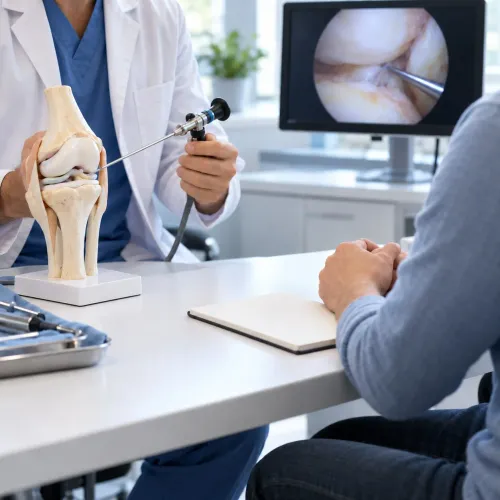
Do not treat every sudden flare as osteoarthritis. Infection can damage the joint quickly, while a fracture can worsen if you continue walking on it. Routine arthroscopic “clean-out” surgery does not treat ordinary osteoarthritis, but a separate locked-knee problem may require specialist treatment.
How Clinicians Assess Movement and Joint Damage
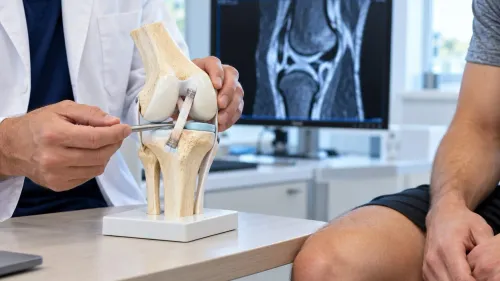
A clinical knee assessment combines your symptom history with an examination of movement, strength and joint stability. The clinician compares both knees and watches how the joint behaves during ordinary movement.
The examination usually includes:
- Walking and alignment, including limping, knock-knees or bow-legs
- Range-of-motion testing, checking how far you can bend and straighten the knee
- Strength testing, especially of the quadriceps
- Palpation for tenderness, warmth, swelling or fluid
- Stability testing for abnormal side-to-side or front-to-back movement
A weight-bearing X-ray is useful when symptoms are persistent, the diagnosis is uncertain, or treatment decisions require a clearer view of structural change. Standing front and side views show joint-space narrowing under load, osteophytes, changes in the bone beneath the cartilage and overall alignment. The image supports the examination; it does not measure pain directly.
MRI is not routinely needed for typical osteoarthritis. If your symptoms match activity-related pain with brief stiffness and the examination fits, an MRI rarely changes the initial treatment plan. It can show age-related meniscal or cartilage changes that are not causing the problem, which can lead to unnecessary concern.
Clinicians reserve MRI for an atypical pattern or a suspected problem that an X-ray cannot explain, such as a significant meniscal injury, ligament damage, stress fracture or bone disorder. Loss of movement, recurrent locking or symptoms after a substantial injury can justify that further investigation.
Improving Movement: Exercise, Support and Treatment Choices
Exercise and gradual weight loss improve knee function more reliably than resting the joint. Build quadriceps strengthening, range-of-motion work, cycling, walking or aquatic exercise into a routine that fits your current ability.
Exercise need not be pain-free, but a substantial or persistent flare means reducing resistance, duration or frequency and reviewing the programme rather than pushing through.
Any weight loss can help pain and physical function; greater loss generally brings greater benefit. Combining weight management with exercise works better than relying on either alone.
| Option | What it helps | When to discuss it |
|---|---|---|
| Walking stick | Reduces load and improves mobility | Hold it in the hand opposite the affected knee |
| Knee brace or insole | May improve alignment or stability | Consider it for instability or abnormal loading, not routinely |
| Topical diclofenac | Provides local pain relief | Ask about safe use if skin is damaged, or if you take other anti-inflammatory medicines |
| Corticosteroid injection | Short-term relief, often around 2 to 10 weeks | Consider it for a flare when exercise is difficult; it does not correct the arthritis |
| Hyaluronic-acid injection | Limited average benefit | It is not routinely recommended for symptomatic knee osteoarthritis |
Discuss medication with an orthopaedic clinician when pain blocks exercise or sleep, or when self-care is insufficient. At UR Orthopaedic Clinic, ask which option fits your medicines, medical conditions and movement goals.
Discuss knee replacement when pain, stiffness or reduced function substantially affects quality of life and non-surgical treatment has failed or is unsuitable. An X-ray described as “severe” alone is not enough, and age, smoking, body mass index or other conditions should not automatically prevent referral.
Frequently asked questions
Why does knee osteoarthritis cause stiffness?
Cartilage thinning increases friction and reduces load absorption. Pain, swelling and protective muscle guarding can further restrict movement.
How can knee stiffness affect everyday movement?
It can shorten your stride, slow stair climbing, make chairs harder to rise from and limit bending, walking and other daily activities.
When does knee stiffness need prompt assessment?
Arrange prompt assessment if stiffness comes with sudden swelling, inability to bear weight, a locked knee or a rapid decline in movement.
How do clinicians assess knee movement and joint damage?
They assess your walking pattern, knee range of motion, swelling, tenderness, stability and strength, then use imaging when findings require a closer look.
What can improve movement with knee osteoarthritis?
A tailored exercise plan, pacing, appropriate support and treatment for pain can improve movement. A clinician can help match options to your symptoms and joint findings.