PRP is not a single standardised injection, and the right choice depends on the diagnosis, the preparation used, and what you want to return to doing. By the end, you will know what happens during the appointment, how to weigh PRP against other treatments, which warning signs matter, and when results should be judged.
Key takeaways
- PRP uses processed blood components, not a generic stem-cell injection.
- Suitability depends on your diagnosis, medicines, bleeding risks, and treatment goals.
- Compare PRP with physiotherapy, medication, injections, or surgery before deciding.
- Track pain, function, activity, and examination findings at scheduled follow-ups.
What happens during a PRP appointment, and what exactly is being injected?
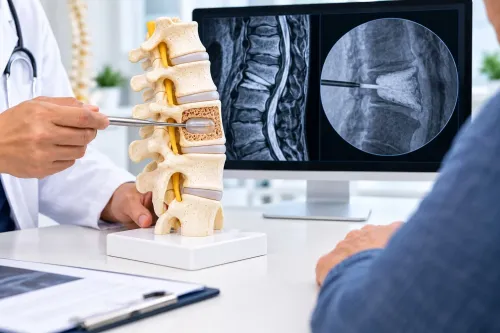
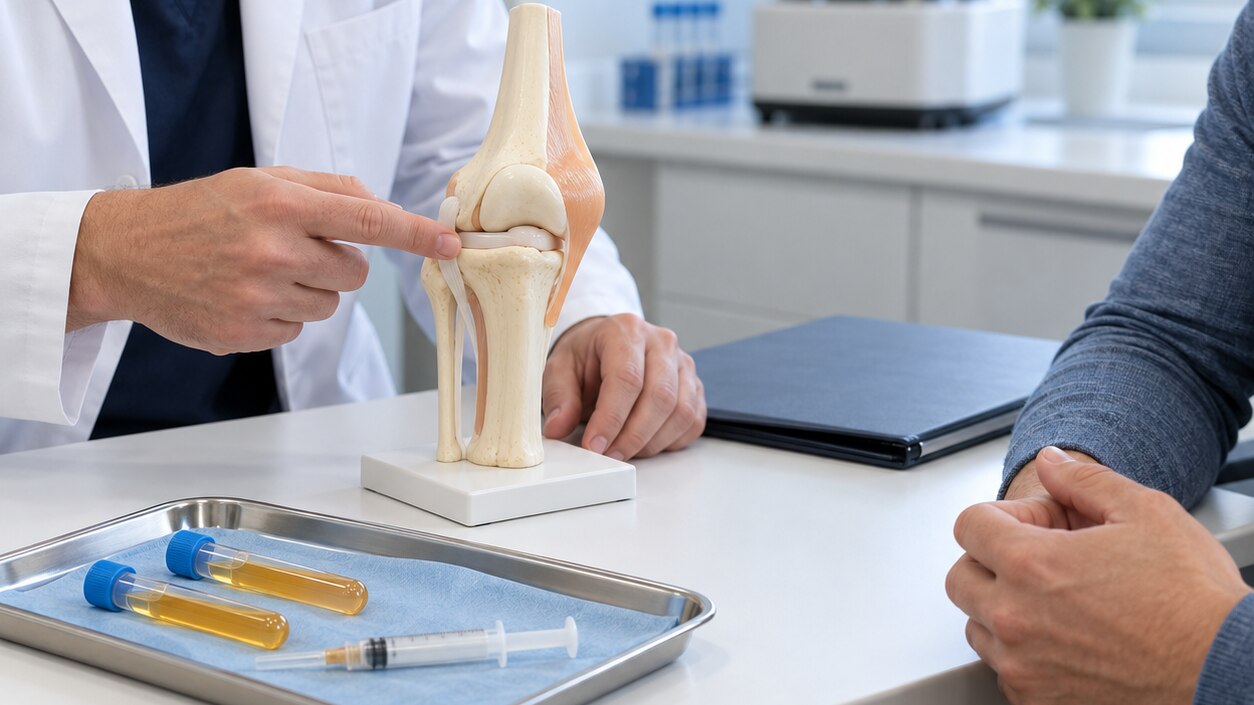
A PRP appointment starts with a review of your diagnosis, symptoms, medicines, allergies, and bleeding risks. The clinician explains expected benefits and risks, then obtains consent. Preparation and the blood draw come first; your blood undergoes centrifugation or other processing while you wait.
The platelet concentrate is separated from other blood components, the skin is cleaned, and the prepared platelet-rich plasma is injected into the selected tendon, joint, ligament, or another target. You then receive instructions about activity, medicines, wound care, and warning signs before discharge.
Platelet-rich plasma is your own blood plasma prepared with a higher platelet content than ordinary blood. PRP therapy does not use one standard product, so ask:
- Which preparation is being used, and why does it fit my diagnosis?
- What are its platelet concentration, white-cell content, red-cell contamination, activation method, and injection volume?
- Is ultrasound guidance planned, and how many injections are proposed?
Ultrasound can improve needle placement for deep or small targets and help avoid nearby structures, but accurate placement does not guarantee a better result.
| Feature | What varies | Why it matters |
|---|---|---|
| Platelet concentration | Lower or higher enrichment | Studies and outcomes may not transfer between products |
| White and red cells | Leukocyte content and red-cell contamination | The injected biological mixture differs |
| Activation | Activated before injection or left to activate locally | It changes how platelets release signalling substances |
| Protocol | Single injection or multiple injections | There is no universal schedule; relate it to the diagnosis and evidence |
Which conditions have the best evidence, and how is suitability decided?
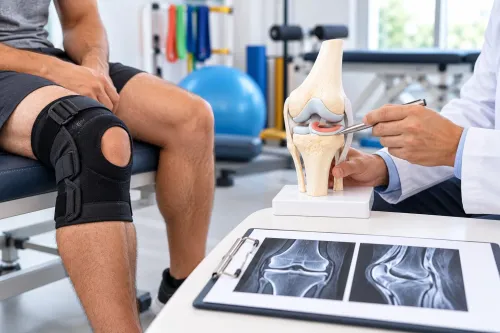
PRP suitability depends on the diagnosis, not the injection alone. Evidence for knee osteoarthritis is mixed: in the RESTORE trial, 288 adults received three leukocyte-poor PRP injections or saline, and PRP did not significantly improve pain or cartilage volume at 12 months.
The American College of Rheumatology/Arthritis Foundation conditionally recommends against knee osteoarthritis PRP, while AAOS describes possible pain and function benefits but rates the evidence as limited.
| Condition | Evidence | Practical implication |
|---|---|---|
| Knee osteoarthritis | Mixed; results vary with preparation and protocol | Do not expect cartilage regrowth or correction of deformity |
| Tennis elbow | Variable; protocol and rehabilitation affect results | Progressive loading remains essential |
| Patellar tendinopathy | Inconsistent | PRP is not a substitute for staged tendon exercise |
| Achilles tendinopathy | Variable and less predictable in longstanding disease | Match treatment to tendon findings and activity goals |
| Rotator cuff tendinopathy | Mixed | Confirm that pain is not caused by a full-thickness tear |
| Plantar fasciitis | Variable | Compare PRP with exercise, load modification, and other options |
| Acute muscle or ligament injury | Weaker and less consistent support | Avoid treating PRP as an automatic shortcut to recovery |
- The diagnosis through examination and suitable imaging
- Symptom duration and severity
- Failure of an appropriate exercise or medication programme
- Your walking, work, or sporting goals
- A treatable tendon or joint target
For tendinopathy, progressive rehabilitation remains central; returning immediately to the provoking activity can worsen symptoms and hide whether PRP helped.
When is PRP the wrong choice, and what alternatives should you compare?
A secure diagnosis comes before PRP. Do not inject through skin infection or during an active systemic infection. PRP contraindications and reasons for specialist review include:
- Untreated bleeding disorders, markedly low platelet counts, severe anaemia, or certain blood cancers
- Inability to pause anticoagulants safely
- Pain from a fracture, advanced joint damage, locking, deformity, or another structural problem needing different treatment
- A fully torn tendon or ligament
Never stop anticoagulant or antiplatelet medication without the prescribing clinician.
PRP does not regrow severely worn cartilage or mechanically repair a complete tear. It is also a poor substitute when the main problem is mechanical failure. Compare the options against your diagnosis, goals, risks, and rehabilitation capacity.
| Option | Main trade-off | When it fits |
|---|---|---|
| Structured exercise and physiotherapy | Builds strength and load tolerance; progress takes time | Tendinopathy, weakness, and many stable joint problems |
| Medication | Can reduce pain enough to permit movement; effects and risks vary | Short-term symptom control or inflammatory flares |
| Corticosteroid injection | Often faster short-term relief; not dependable long-term treatment for every tendon problem | Selected inflammatory pain when rapid relief matters |
| Hyaluronic acid | PRP vs hyaluronic acid results depend on preparation, comparator, follow-up, and study quality | Some joint conditions after discussing uncertain benefit |
| Surgery | Addresses mechanical failure but involves recovery and operative risks | Complete tears, fractures, deformity, locking, or advanced structural damage |
For PRP vs corticosteroid injection, faster relief does not prove better recovery. Physiotherapy and PRP should be compared as complementary choices, not substitutes.
What outcome and recovery timeline should you realistically expect?
Expect less pain, better function, easier walking, or greater sport tolerance—not a guaranteed cure. PRP may alter the local healing environment, but it cannot restore lost cartilage or mechanically repair a complete tear. No benefit is also a legitimate PRP expected result.
PRP recovery time depends on the target and your symptoms:
- For the first several days, protect the injected area and limit provoking loads; soreness, swelling, bruising, or a post-injection flare are common PRP side effects.
- Pain relief often takes weeks, not hours. Walking can resume when the target and symptoms allow, following your clinician’s instructions.
- Tendon problems need a longer reassessment window than a short-lived pain flare; progressive rehabilitation remains central.
- Knee osteoarthritis should be judged by pain plus walking distance, stairs, strength, and daily function.
- Return to sport after PRP should progress through rehabilitation and functional testing before running, jumping, throwing, or contact play.
NSAID restrictions around PRP are not standardised. Do not pause ibuprofen, naproxen, or another NSAID without agreement from the prescriber, especially when it treats cardiovascular disease. Seek assessment for fever, spreading redness, worsening pain, or marked swelling: risks include infection, bleeding, nerve or vessel injury, and failure to improve.
How should follow-up determine whether PRP worked?
A useful PRP follow-up compares your baseline with measurable function, not pain alone. Record walking distance, stairs, grip, lifting, running, sleep, or sport-specific tasks. Review adherence to load modification and the exercise programme, and record adverse effects.
| Measure | Baseline | Follow-up |
|---|---|---|
| Pain | Usual and activity pain | Change during the same tasks |
| Function | Distance, stairs, grip, or sport limits | What you can now do |
| Recovery | Sleep and flare symptoms | Duration and severity of symptoms |
If improvement is absent, reconsider the diagnosis, target, or rehabilitation rather than automatically repeating the injection. There is no universal rule for one injection, three injections, or a particular platelet concentration. The review date and repeat-injection decision must match the diagnosis and evidence for the preparation used.
Know when to seek medical help after PRP: fever, spreading redness, rapidly increasing pain, marked swelling, persistent locking, significant instability, or progressive loss of function need urgent reassessment.
For a PRP follow-up at UR Orthopaedic Clinic, ask for:
- The confirmed diagnosis and supporting examination or imaging
- The preparation details and reason for its selection
- The PRP rehabilitation and medication instructions
- Measurable success criteria and the date benefit will be reviewed
A sound PRP treatment plan connects injection decisions with rehabilitation and alternatives, rather than treating PRP as an automatic course.
Related service
injection Platelet Rich Plasma View service → |
Frequently asked questions
What happens during a PRP appointment, and what is injected?
The clinician reviews your diagnosis, symptoms, medicines, allergies, and bleeding risks before obtaining consent. Blood is drawn, processed by centrifugation or another method, and the resulting platelet-rich plasma is injected into the planned treatment site.
Which conditions have the best evidence for PRP, and how is suitability decided?
Suitability depends on the specific diagnosis, symptom duration, examination findings, previous treatment, medicines, bleeding risks, and your goals. Evidence differs by condition, so ask which studies support PRP for your diagnosis.
When is PRP the wrong choice, and what alternatives should you compare?
PRP is the wrong choice when the diagnosis is uncertain, an urgent procedure is needed, risks outweigh likely benefit, or you cannot follow the recovery plan. Compare options such as physiotherapy, medicines, other injections, or surgery.
What outcome and recovery timeline should you expect after PRP?
Expect soreness after the injection and improvement that develops over time rather than immediately. The timeline and amount of benefit depend on the treated condition, baseline function, rehabilitation, and individual response.
How should follow-up determine whether PRP worked?
Use the same pain scores, functional tasks, activity targets, and examination findings at follow-up. Compare them with your baseline and agree in advance what improvement justifies continuing, changing, or stopping treatment.