Pain under the heel when you first stand after sleeping or sitting often points to plantar fasciitis, but that timing alone cannot confirm the cause. You will learn how the condition behaves, which clues separate it from other heel problems, what to try at home, and when an examination or further treatment is warranted.
Key takeaways
- Roll your foot gently and stretch before walking after rest.
- Wear supportive footwear instead of walking barefoot on hard floors.
- Stop stretches that sharply increase pain during or after exercise.
- Seek examination for persistent, severe, or unusual heel pain.
Why Your Heel Hurts When You First Stand Up
The first-step pain pattern in plantar fasciitis comes from loading a shortened, irritated plantar fascia after hours of rest. This thick band of connective tissue runs from the heel bone to the bases of the toes, supports the arch, and helps absorb and return force as you walk.
- During sleep, your ankle often rests pointed downward. The calf and plantar fascia remain in a shortened position, while the irritated tissue settles.
- When you stand, your body weight suddenly stretches the fascia. The toes bend upward, tightening the band beneath the foot and pulling on its attachment near the inner heel.
- After several steps, movement warms the tissues and distributes the load, so the pain can ease. It may return after sitting, standing for a long time, or walking again.
The result is the familiar morning heel pain: a sharp ache under or slightly inside the heel during the first steps in the morning. Tenderness often centres on the medial calcaneal tubercle, the bony area where the plantar fascia attaches. “Fasciitis” describes the painful condition, although long-lasting cases involve tissue degeneration as well as inflammation.
Pain that improves with movement supports this pattern, but it does not prove plantar fasciitis. Severe pain, pain at rest, swelling, numbness, fever, or inability to bear weight after an injury needs medical assessment rather than assuming the fascia is responsible.
Does Your Heel Pain Fit Plantar Fasciitis—or Something Else?
Compare location, timing, triggers, and accompanying symptoms rather than relying on morning pain alone. Plantar fasciitis usually causes plantar-medial heel pain, with tenderness near the medial calcaneal tubercle. The pattern can suggest a cause, but it cannot confirm one without an examination.
| Condition | Location | Timing and triggers | Associated clues |
|---|---|---|---|
| Plantar fasciitis | Under the heel or along its inner edge | Sharpest with the first steps after sleep or sitting; may ease with movement and return after prolonged standing | Local tenderness; no fever, wound, or neurological deficit |
| Calcaneal stress fracture | Deep pain within the heel bone | Worsens with walking, running, or jumping and progresses with continued loading | Pain may persist at rest; squeezing the heel can hurt |
| Heel fracture | Heel after a fall, crush, or forceful landing | Immediate pain, made worse by bearing weight | Marked swelling, bruising, deformity, or inability to walk |
| Nerve irritation | Burning, tingling, or pain spreading through the sole or inner ankle | Triggered by pressure or prolonged standing; may disturb sleep | Numbness, pins and needles, or weakness |
| Achilles tendinopathy | Back of the heel, where the tendon attaches | Worse with running, stairs, or repeated heel raises | Tender, thickened tendon rather than tenderness under the heel |
Seek urgent assessment for fever, redness or warmth, an open wound, severe swelling, inability to bear weight after injury, new weakness or numbness, or unexplained night or rest pain. Arrange an examination when pain is severe, atypical, recurrent, or fails to improve; imaging can then check for fracture or another cause.
The First Changes to Make at Home
For the next 1–2 weeks, use relative activity reduction rather than complete rest. Cut back on running, jumping, long walks, and prolonged standing, especially if pain increases during or after them. Pain that eases after several minutes does not prove the tissue has healed; loading it harder can bring the pain back.
| Change | Practical step | What to avoid |
|---|---|---|
| Activity | Keep gentle daily movement, but shorten aggravating sessions and increase them gradually. | Running, jumping, or long standing through rising pain. |
| Footwear | Wear supportive shoes with cushioning and a firm sole from your first steps in the morning. | Barefoot walking, thin slippers, and worn-out shoes. |
| Surface | On hard floors, temporarily modify activity; use a cushioned mat where you stand for long periods. | Repeated barefoot standing on tile, concrete, or stone. |
| Ice | Roll a chilled bottle under the heel for 10–15 minutes, or apply a wrapped ice pack after activity. | Placing ice directly on skin or sleeping with it in place. |
| Stretching | Perform gentle plantar-fascia-specific and calf stretches several times daily, including before walking after rest. | Bouncing, forcing the stretch, or continuing when sharp pain worsens. |
Keep the stretch mild: it should create tension across the sole or calf, not a stabbing heel pain. If symptoms steadily worsen despite these changes, stop increasing activity and arrange an examination.
How to Stretch Without Restarting the Pain Cycle
Stretch into a mild pull, not sharp heel pain. Bouncing or forcing the toes upward can irritate the fascia and restart the morning pain cycle. Use these steps consistently:
1. Perform the wall calf stretch with both hands on a wall, the affected leg behind you, heel flat, and knee straight. Lean forward until you feel the stretch in the upper calf; hold for 30 seconds and repeat three times.
Bend the back knee slightly for a second set that targets the deeper calf muscle.
2. Use a towel stretch before getting out of bed. Sit or lie with the knee straight, loop a towel around the ball of your foot, and gently pull the foot toward you. Hold for 30 seconds, repeat three times, and lower the foot slowly before standing.
3. Complete the seated plantar-fascia stretch before walking after rest. Cross the affected foot over the opposite knee, pull the toes and forefoot back until you feel tension along the arch, and hold for 10 seconds. Repeat 10 times, using your other hand to massage the tight band from heel toward toes.
Pain easing after several minutes does not prove the tissue has healed. Resume exercise through a gradual return to running: begin with brisk walking, then alternate short jogs with walking on level ground. Increase either running time or distance, not both, and reduce the load if next-morning pain is clearly worse.
When Heel Pain Needs an Examination or More Than Home Care
Seek urgent assessment for fever, a red or hot heel, an open wound, inability to bear weight after injury, marked swelling, numbness or weakness, or unexplained pain at night or rest. These signs raise concern for infection, fracture, nerve disease, or another diagnosis.
Arrange an examination when pain is severe, recurrent, worsening, or fails to improve after several weeks of consistent home care. Plantar fasciitis is usually a clinical diagnosis based on the pain pattern and tenderness near the medial calcaneal tubercle. Routine imaging is unnecessary when findings are typical.
Imaging becomes useful when symptoms are atypical or recovery is not following the expected course. Plain radiographs can identify a fracture, arthritis, or another bony cause. Ultrasound can show plantar-fascia thickening, but thickening alone does not prove it causes the pain. MRI imaging is reserved for selected diagnostic problems.
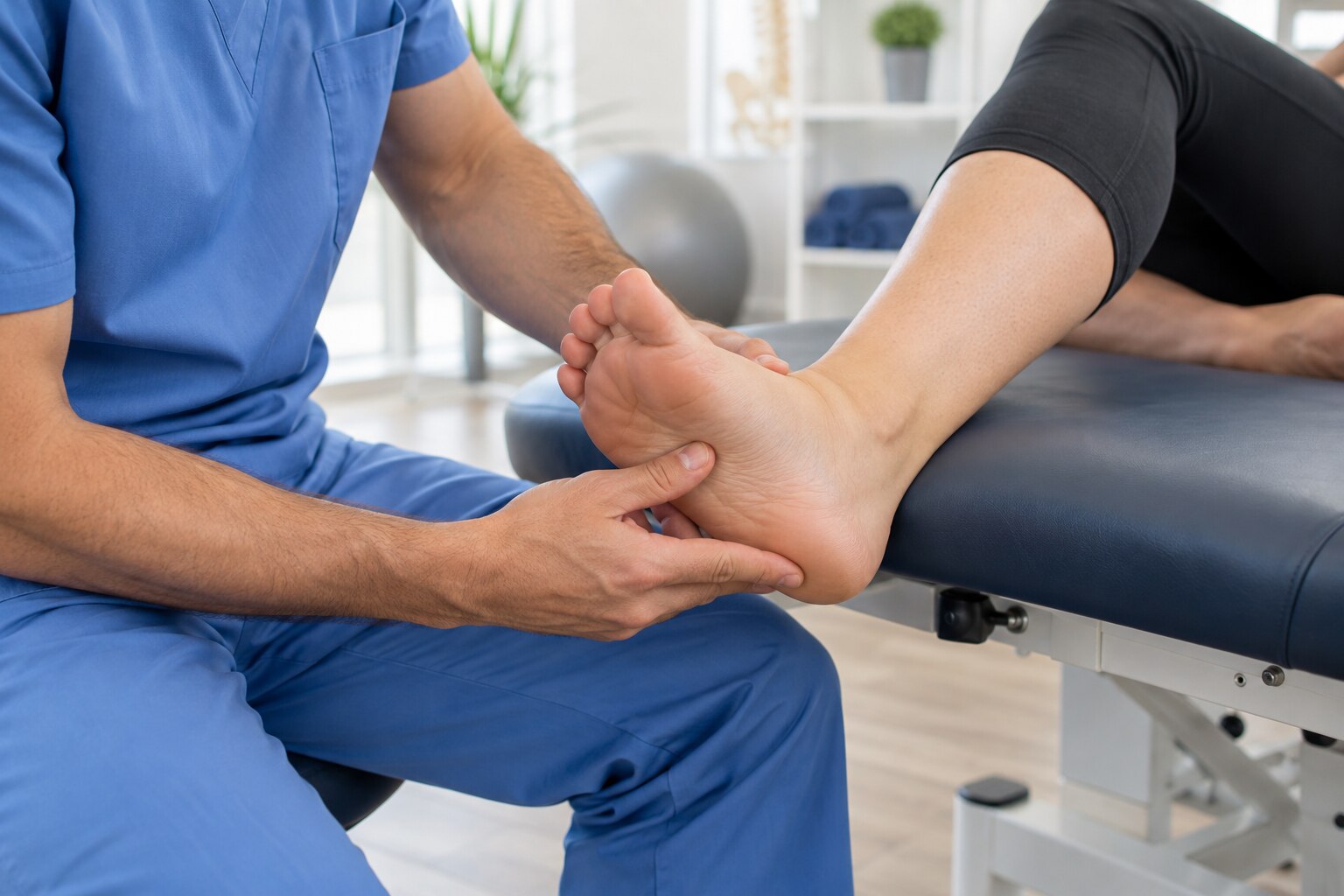
UR Orthopaedic Clinic can assess heel pain after trauma and decide whether suspected fracture or another condition needs imaging rather than treating every case as plantar fasciitis.
- Orthoses: Prefabricated or custom inserts can reduce strain; custom devices are not automatically better.
- Night splints: Worth discussing when first-step pain persists; comfort and adherence determine their value.
- Injections: Corticosteroid injections can provide short-term relief but carry risks, including fascia rupture and heel-pad damage.
- Shock-wave therapy: Consider it after substantial conservative treatment; results vary by device and protocol, and relief is not immediate.
- Surgery: Reserved for persistent, disabling pain after prolonged nonoperative care because recovery and complications matter.
Most patients improve without surgery, but recovery can take many months; pain after a few weeks does not prove treatment has failed.
Frequently asked questions
Why does plantar fasciitis hurt most during the first morning steps?
After hours of rest, the plantar fascia is shortened and irritated. Standing loads it suddenly, causing heel pain that often eases as you move.
How can you tell plantar fasciitis from another cause of heel pain?
Plantar fasciitis usually causes pain under the heel during the first steps after rest. Pain in another location, numbness, swelling, injury, or worsening symptoms can point to a different problem.
What changes can you make at home for plantar fasciitis?
Wear supportive shoes, avoid prolonged barefoot walking on hard floors, reduce aggravating activity, and use gentle foot and calf stretches.
When should heel pain be examined by a clinician?
Arrange an examination when pain persists despite home care, limits walking, follows an injury, becomes severe, or includes swelling, numbness, redness, or weakness.