GFC therapy uses a processed sample of your own blood, but the name does not describe one universally standardised product or guarantee tissue repair. By understanding the preparation, eligibility checks, injection process, aftercare, risks and alternatives, you can ask more useful questions and judge whether the treatment fits your diagnosis.
Key takeaways
- Ask which blood components, activation method and volume the clinic uses.
- Compare GFC with PRP by preparation, evidence, cost and injection target.
- Plan reduced activity after injection and attend the scheduled improvement assessment.
- Seek medical advice for fever, worsening redness, severe pain or new weakness.
What Is GFC Therapy, and How Does It Compare with Other Injections?
GFC therapy injects a processed fraction of your own blood into or around the painful tissue. The preparation is called growth factor concentrate, but GFC is not a single standardised product: platelet count, white-cell content, fibrin structure, activation method and injected volume vary between clinics.
Ask for the preparation protocol rather than assuming every GFC treatment is equivalent.
For a meaningful PRP injection comparison, note that GFC often overlaps with PRP because both use autologous blood and may contain platelets and signalling proteins. The label alone does not prove that new cartilage, tendon or bone will grow.
| Option | What is injected | Main difference from GFC |
|---|---|---|
| PRP | Plasma containing a concentrated platelet level, with variable white-cell and fibrin content | PRP is a defined preparation category, while “GFC” can describe several blood-processing protocols and may overlap with PRP |
| Corticosteroid | An anti-inflammatory medicine such as triamcinolone | It suppresses inflammation; it does not use your blood or provide a platelet-derived preparation |
| Hyaluronic acid | A manufactured or laboratory-derived hyaluronic-acid gel | It aims to improve joint lubrication and symptoms, without injecting blood components |
| Stem-cell treatment | A cell-containing product from bone marrow, fat tissue or another source | It involves cells, not simply a blood-derived concentrate; “stem cell” does not guarantee tissue regeneration |
None of these injections repairs every cause of pain. A displaced meniscal tear, fracture, infection, severe instability or spinal nerve problem requires diagnosis and condition-specific treatment, not automatic repeat injections.
Which Conditions and Patients May Be Suitable for GFC?
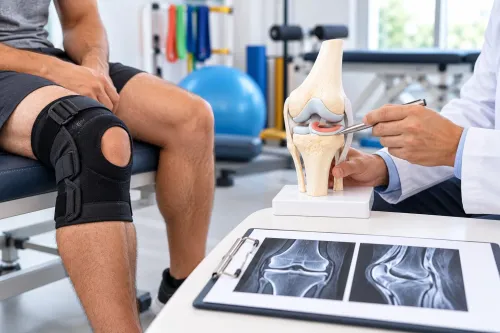
A reasonable candidate has a confirmed pain source that matches the examination and imaging findings. GFC may be considered for selected knee osteoarthritis, tendon injuries, ligament injuries and sports-related musculoskeletal pain when symptoms persist despite appropriate exercise, activity changes or other non-operative care.
| Finding | What it suggests | Decision |
|---|---|---|
| Localised pain, reproducible on examination, with matching X-ray, ultrasound or MRI findings | The treated tissue is probably the pain source | GFC may be reasonable |
| Displaced meniscal tear, major ligament instability, fracture or advanced joint destruction | An injection will not correct the mechanical problem | Treat or assess the structural problem first |
| Normal local scans with numbness, weakness or back-related pain | Referred pain or nerve involvement | Investigate another source |
| Fever, skin infection, infected wound or unexplained joint swelling | Infection risk or an incorrect diagnosis | Postpone and investigate urgently |
The clinician also reviews blood disorders, platelet disorders, severe anaemia, prior clotting problems and medicines that materially alter clotting. Active infection at the injection site or elsewhere can require postponement; do not stop prescribed anticoagulants or antiplatelet medicines without medical advice.
UR Orthopaedic Clinic can use the examination and imaging review to separate an injection-suitable pain pattern from a fracture or unstable injury needing different treatment. GFC should also be reconsidered if symptoms do not match the treated structure or persist after treatment; repeating injections without reassessing the diagnosis can delay effective care.
What Happens Before and During a GFC Injection?
Expect a consultation before the needle reaches your joint or tendon. The clinician will confirm the diagnosis, review medicines and allergies, examine the target area, explain possible pain, bruising, infection and lack of improvement, and obtain consent.
1. Ask exactly what the clinic means by GFC procedure. Confirm the blood volume, centrifugation or separation method, platelet and white-cell content, activation method, fibrin structure and planned injected volume. “GFC” is not a standardised product name, so protocols can differ.
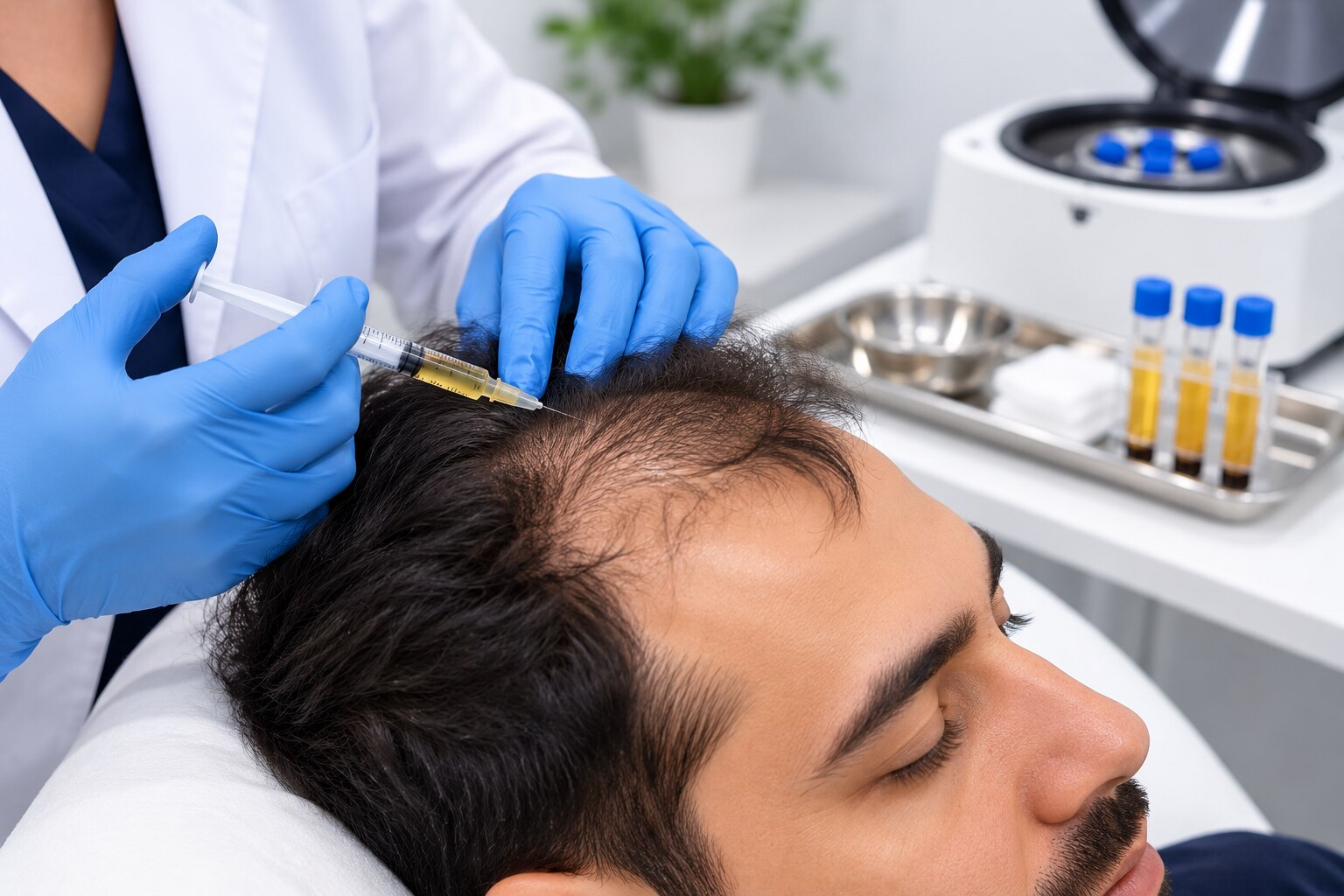
2. During blood collection, staff draw your blood into sterile tubes, usually from an arm vein. The amount depends on the preparation system and treatment site; tell the clinician if you have fainted during blood tests or take medicines that affect bleeding.
3. The sample undergoes centrifugation or another separation process. This concentrates the selected blood components, and the clinician prepares the intended fraction for injection without assuming it is identical to PRP or another clinic’s GFC.
4. You will position the body so the target is accessible. The skin is cleaned with an antiseptic solution and allowed to dry; do not touch the prepared area.
5. The clinician may give a local anaesthetic injection near the skin or deeper tissues. It can sting briefly, and its use and location depend on the target and the clinic’s protocol.
6. Ultrasound or fluoroscopy may guide the needle into a joint, tendon sheath or bursa. Imaging improves placement accuracy, but it does not prove that GFC will repair the underlying condition.
Expect soreness or swelling after the injection; receive written instructions before leaving.
What Aftercare Is Needed, and When Is Improvement Assessed?
Follow the written GFC aftercare instructions for the treated joint, tendon or ligament. Limit strenuous activity for the period your clinician specifies, then resume normal movement gradually. Do not test the injection with running, heavy lifting or sport while pain is increasing.
Exercise should restart with gentle, pain-limited range-of-motion work and progress to strengthening when movement is comfortable.
Guidance on NSAIDs after injection is not uniform. Some clinicians ask you to avoid them because they can affect platelet function, but the ideal timing and clinical importance remain unsettled. Do not stop aspirin, anticoagulants or prescribed anti-inflammatory medicine without advice from the clinician who manages it. Use only the recommended pain relief.
Injection soreness can last briefly; ice or heat depends on the protocol and treated structure.
Seek prompt medical review for:
- Fever, rapidly increasing redness or warmth, or drainage
- Severe or escalating pain
- New weakness or numbness
- Marked swelling
Assess improvement over weeks, using the original pain, examination findings, daily activities and agreed exercise goals. Immediate relief, injection soreness or no same-day reaction does not prove success or failure. If symptoms persist, reassess the diagnosis and treatment options rather than assuming another injection is needed.
Repeat GFC injections should follow documented response, examination and clinical judgement; there is no universally validated interval or fixed schedule.
What Benefits, Limitations and Warning Signs Should You Weigh?
Current evidence supports only a cautious promise: PRP-type injections may reduce pain and improve function for some people with knee osteoarthritis, but average benefit varies. PRP evidence remains limited, and no good evidence shows that GFC restores lost cartilage or changes osteoarthritis’s long-term course.
The American College of Rheumatology and Arthritis Foundation conditionally recommend against PRP for knee and hip osteoarthritis because preparations and study results differ; this does not mean every patient will fail to respond.
Compare GFC with other osteoarthritis treatment options by asking what problem each option addresses:
| Option | Potential value | Limitation to weigh |
|---|---|---|
| GFC | May provide symptom relief for selected patients | Cannot repair a displaced meniscal tear, fracture, infection or spinal pain |
| Exercise and physiotherapy | Builds strength, movement and daily function | Requires consistent participation and time |
| Corticosteroid injection | Often provides short-term inflammatory pain relief | Repeated use has potential drawbacks and does not restore cartilage |
| Surgery | Corrects selected mechanical damage or advanced joint disease | Involves recovery, surgical risks and suitability limits |
GFC risks include infection, bleeding and nerve injury. Seek urgent review for fever, rapidly increasing redness or warmth, drainage, severe or escalating pain, new weakness or numbness, or marked swelling. These post-injection warning signs are not a healing response to ignore. Persistent symptoms also require reassessment, not an automatic repeat injection.
Frequently asked questions
What is GFC therapy, and how does it compare with other injections?
GFC uses a processed fraction of your own blood, but products differ in platelet count, white-cell content, fibrin structure, activation method and volume. Compare those details with PRP, corticosteroid and hyaluronic acid injections rather than treating all injections as equivalent.
Which conditions and patients may be suitable for GFC?
Suitability depends on the painful tissue, diagnosis, symptom duration, examination findings, imaging and medical history. A clinician must assess whether GFC fits your condition and whether another treatment is safer or better supported.
What happens before and during a GFC injection?
The clinician reviews your diagnosis, medicines, allergies and treatment goals, draws blood, processes it into the planned preparation, and injects it into or around the target tissue. Ultrasound or other image guidance may be used when precise placement is needed.
What aftercare is needed, and when is improvement assessed?
Follow the clinic’s instructions on activity, wound care, pain relief and return to exercise. Arrange a review at the stated interval because improvement is assessed over time, not immediately after the injection.
What benefits, limitations and warning signs should you weigh?
Potential benefits, evidence and response vary by condition and preparation. GFC is not guaranteed to work, and seek medical advice for fever, spreading redness, severe or worsening pain, drainage, new numbness or weakness.